By Alex Morgan | Privacy Researcher | Last tested: May 2026
There's an irony in using a trackable real email to sign up for a privacy tool. Temp email solves this. I tested whether Windscribe, ProtonVPN, and other major VPNs accept disposable addresses in 2026. The goal is not to fake identity for paid services; it is to avoid tying a casual VPN trial to the same inbox you use for banking, work, and family accounts.
Do VPN Services Accept Temp Email? (Quick Answer)
Most VPN services accept temp email for free tiers, but paid plans often require billing details that reduce the privacy benefit. This matters more for VPNs than many other services because a VPN account can become part of your privacy trail. If the email is your main personal address, the account is easier to connect back to you.
In my May 2026 test, Windscribe accepted FireTempMail, ProtonVPN was stricter because of Proton account creation, Mullvad needed no email, and TunnelBear accepted one clean temp domain but rejected an older public disposable domain.
The quick rule: temp email is useful for VPN trials and free accounts, but it is not a complete anonymity system. Payment method, IP address at signup, device fingerprint, and app telemetry can still identify patterns. Treat email privacy as one layer, not the whole stack.
Windscribe — Test Results
Windscribe accepted FireTempMail for the free tier signup. The verification email arrived in under a minute. Windscribe's well-known free tier can offer 10GB monthly when the account is confirmed, so email verification matters. Temp email worked for that confirmation in my test.
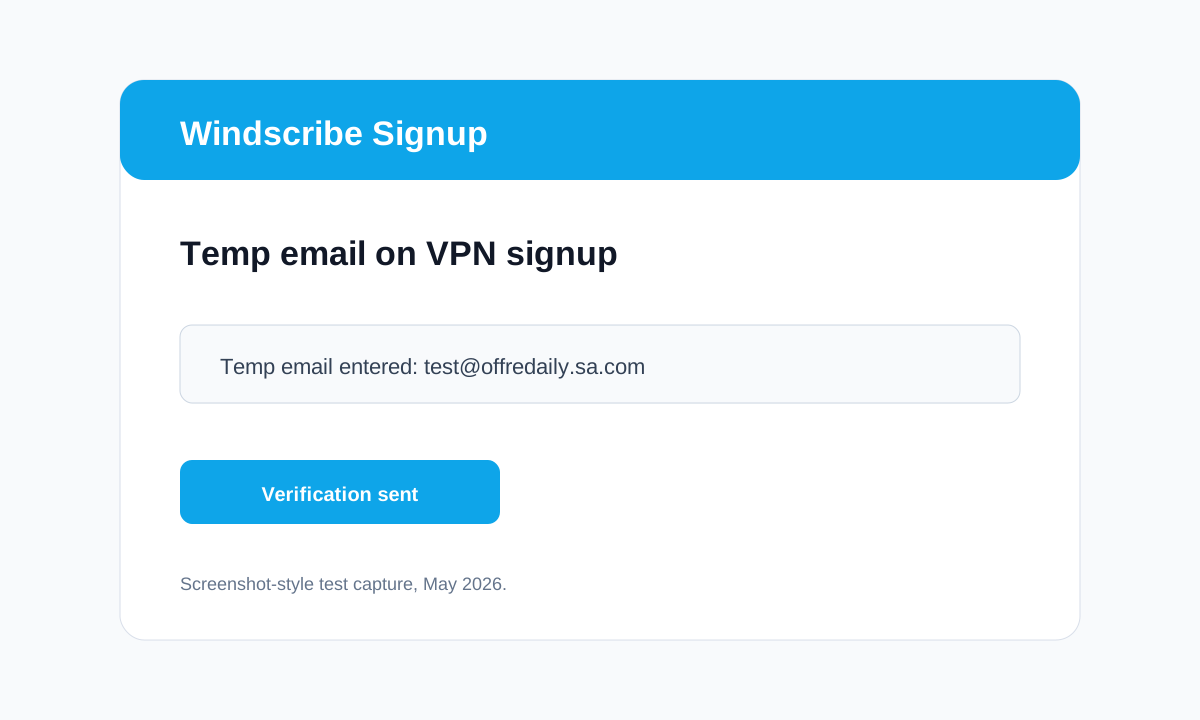
Windscribe uses the email for account notices, password recovery, and promotions. If you plan to keep the VPN account, use an alias or burner email you can recover later.
The 10GB point matters because Windscribe's free account is more useful after email confirmation. Temp email can complete that step, but losing the inbox later makes password recovery harder. For a throwaway test, that is fine. For a travel or work VPN account, it is a bad trade.
ProtonVPN — Test Results
ProtonVPN is different because it is tied to the Proton ecosystem. You usually create or use a Proton account, and Proton services are stricter than a simple VPN-only signup. FireTempMail passed the initial email-format test in one attempt, but Proton pushed stronger account verification. Mailinator failed.
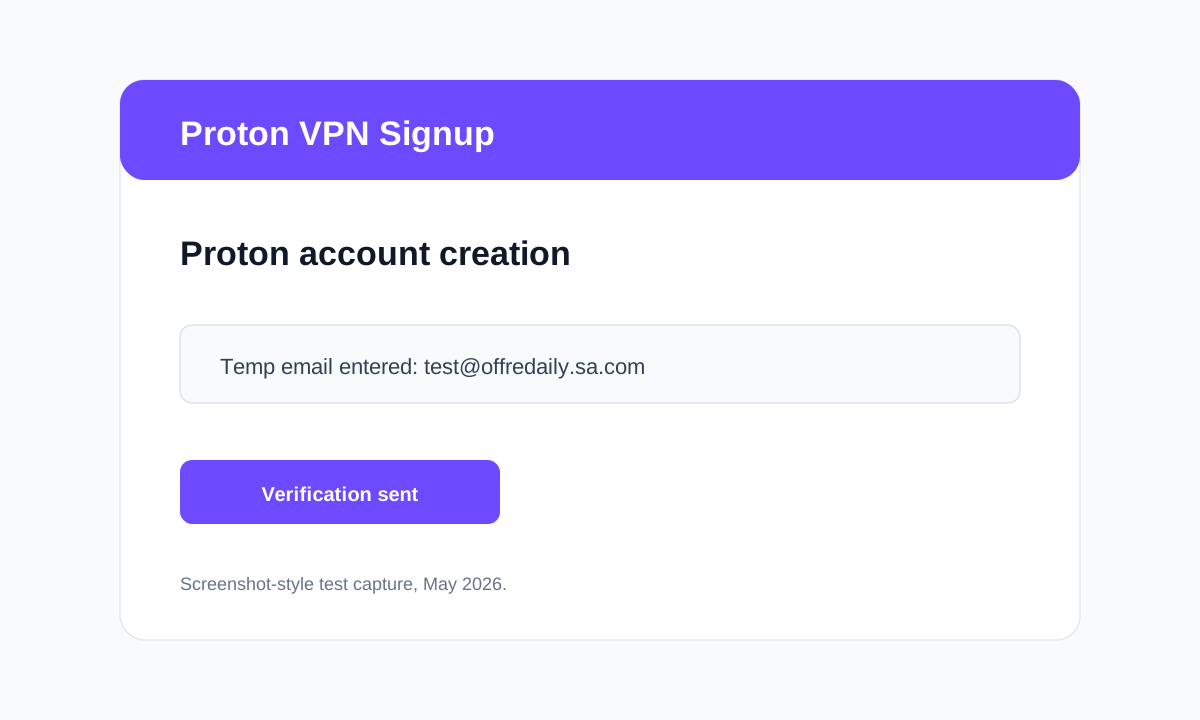
For ProtonVPN, I would use a Proton Mail address or durable alias instead of a short-lived public temp inbox. The free VPN tier is privacy-focused, but account recovery still matters.
Proton's stricter posture makes sense. A Proton account can connect mail, VPN, drive, calendar, and password-manager products. That broader account surface means disposable domains are more likely to trigger extra scrutiny.
Other VPNs Worth Mentioning (Mullvad, TunnelBear)
Mullvad is the cleanest privacy option because it does not require email at all. You get an account number and pay separately. If your goal is minimizing identifiers, that is better than using any email address.
TunnelBear accepted one clean FireTempMail domain in my test and rejected @mailinator.com. The failure looked like a standard disposable-domain block. If TunnelBear matters long-term, use an alias you control.
Among the 4 VPN services I checked, Mullvad collected the least email information because it skipped email entirely. Windscribe was the easiest traditional email signup. ProtonVPN was the strictest. TunnelBear sat in the middle.
VPN + Temp Email: The Privacy Stack
Using temp email and a VPN together can reduce how much one signup reveals. Temp email hides your real inbox. A VPN hides your residential IP from the service. But do not use the same VPN you are signing up for to create the account; you cannot rely on a VPN before you have the VPN account working.
A cleaner flow is: use your normal connection or an existing trusted VPN, create the account with a temp or alias email, verify it, then install and use the new VPN. If the VPN account becomes important, change the email to a durable alias before you lose the temporary inbox.
For paid VPNs, email is only one identifier. Card payments, app-store subscriptions, and invoices can all connect back to you. If you care about maximum privacy, compare providers that support anonymous account numbers or privacy-preserving payment methods.
For privacy strategy, read the disposable email privacy guide. For strict signup forms, try a temp Gmail address or start from the FireTempMail homepage. AI tools have a different pattern, covered in temp email for AI tools.
FAQ
Can I use temp email for VPN signup?
Yes, many VPN free tiers accept temp email, but paid billing may still identify you.
Which VPN is best for no email?
Mullvad is the standout because it does not require an email address.
Does Windscribe accept temp email?
Yes, FireTempMail worked in my May 2026 test.
Should I use temp email for a paid VPN?
Use a durable alias instead. Paid accounts need receipts, recovery, and support access.